Why Northumberland is a Birdwatcher's Paradise
Northumberland's diverse landscapes—from windswept coastlines to ancient woodlands and upland moors—create some of Britain's finest birdwatching territory. The county sits on the East Atlantic Flyway, making it a crucial stopover for migrating species, while its islands host internationally important seabird colonies. Whether you're a seasoned twitcher with a scope or a curious beginner with binoculars, Northumberland offers year-round opportunities to see everything from tiny goldcrests to majestic white-tailed eagles.
The coastline alone supports over 100,000 wintering waders and wildfowl, whilst the Cheviot Hills provide breeding grounds for ring ouzels, merlins, and hen harriers. Spring and autumn bring rarities blown off course during migration, and patient observers are regularly rewarded with first-for-Britain sightings.
The Farne Islands: Seabird Spectacle
No birdwatching guide to Northumberland would be complete without the Farne Islands, one of Britain's most accessible seabird colonies. Between April and July, these rocky outcrops become home to around 100,000 pairs of seabirds including puffins, guillemots, razorbills, kittiwakes, and shags.
The boat trip from Seahouses harbour takes about 20 minutes and lands you on Inner Farne or Staple Island (depending on your chosen tour). Arctic terns nest right beside the boardwalks and are famously aggressive in defending their territory—wear a hat! The puffins are the main draw, pottering about with beaks full of sand eels from May onwards. You'll get close enough for spectacular photos without disturbing them.
Grey seals haul out on the rocks year-round, and the islands are also where Grace Darling made her famous 1838 rescue. National Trust rangers limit visitor numbers to protect the birds, so book your boat trip in advance during peak season.
Best time: May to July for puffins and breeding seabirds Access: Boat trips from Seahouses (various operators, around £25-35 per person) Facilities: No facilities on the islands; bring waterproofs
Druridge Bay Country Park: Waders and Wildfowl
Druridge Bay's seven miles of sandy beach are backed by a series of freshwater pools that act as a magnet for wading birds and waterfowl. The country park's Ladyburn Lake and adjacent Cresswell Pond are particularly productive spots, with hides offering comfortable viewing whatever the weather.
In winter, you might see whooper swans from Iceland alongside resident mute swans, plus good numbers of wigeon, teal, and goldeneye. The shoreline attracts purple sandpipers, turnstones, and sanderling. Spring and autumn migration periods bring passage waders including dunlin, ringed plover, and the occasional rarity like Temminck's stint or spotted redshank.
The varied habitats—dunes, scrub, pools, and farmland—support an impressive year-round list. Reed buntings and sedge warblers breed in the reedbeds, whilst barn owls quarter the fields at dusk. The beach car parks give direct access to the shore for scanning gulls and sea ducks.
Best time: September to March for waders and wildfowl; year-round for variety Access: Free parking at Druridge Bay Country Park; well-maintained paths and hides Facilities: Visitor centre, café, toilets
Hauxley Nature Reserve: Coastal Wildlife Haven
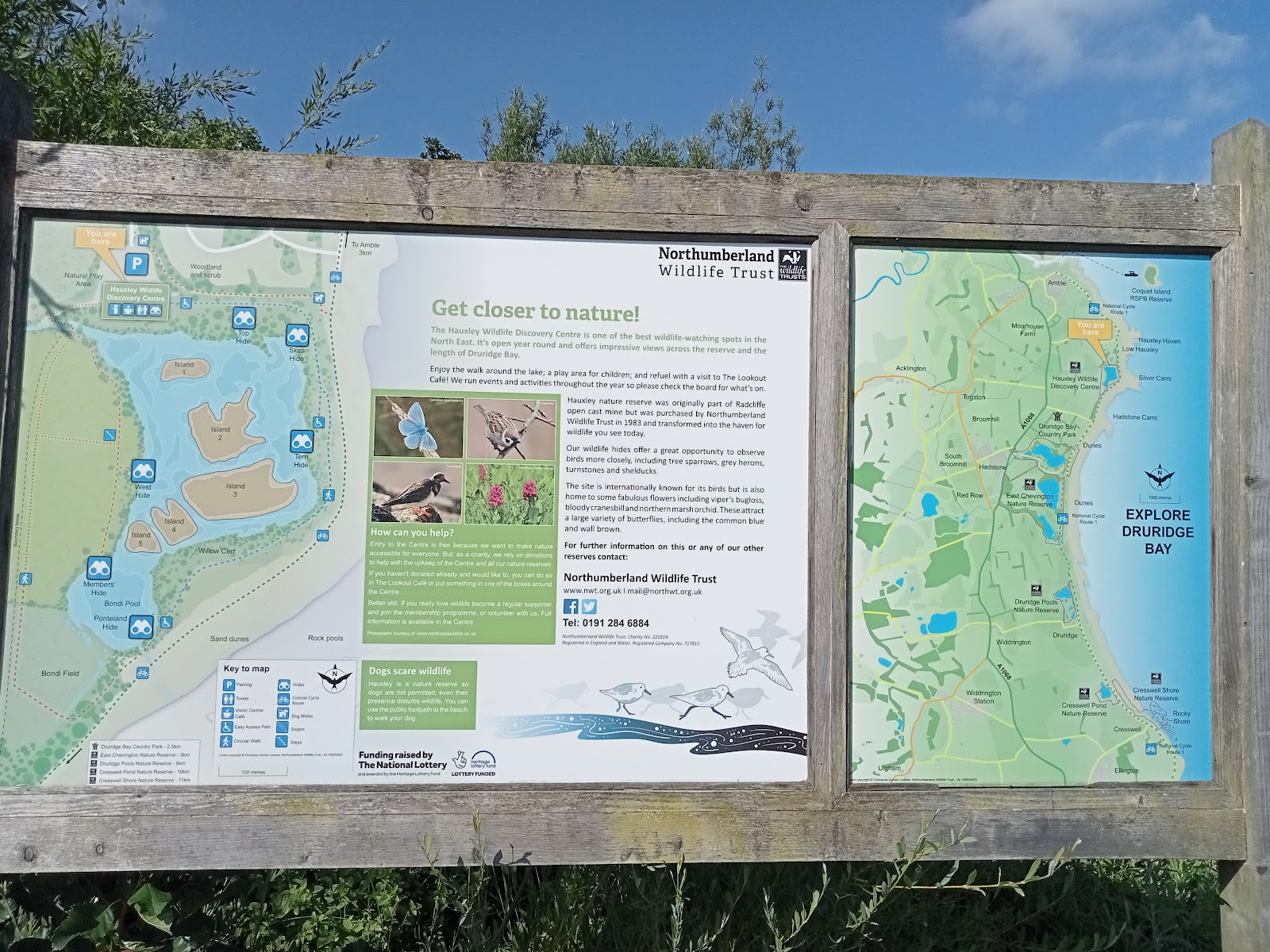
Just south of Druridge Bay, Hauxley Nature Reserve packs an impressive variety of habitats into approximately 80 acres. The reserve's centrepiece is a shallow lagoon surrounded by reedbeds, overlooked by several hides that provide excellent views without disturbing the birds.
Hauxley is particularly good for little egrets, which feed in the shallows year-round, and in recent years great white egrets have become regular visitors too. The lagoon hosts breeding common terns on specially designed rafts, and little terns nest on nearby beaches (though these are roped off during the breeding season).
Otters are occasionally spotted in the early morning, and the reserve's wildflower meadows attract butterflies in summer. The Wildlife Discovery Centre has live nest cameras, identification guides, and helpful volunteers who can point you towards recent sightings.
Winter brings large flocks of golden plovers and lapwings to the fields behind the reserve, whilst the offshore area can produce red-throated divers, long-tailed ducks, and all three diver species with patience and a scope.
Best time: Year-round; spring for breeding terns, winter for ducks and waders Access: Free admission; accessible paths and hides Facilities: Visitor centre (weekend opening in winter), toilets, parking (£3)
Kielder Forest: Woodland Specialists
Britain's largest planted forest might seem an unlikely birdwatching destination, but Kielder's 250 square miles of spruce, pine, and larch support specialist woodland birds that are scarce elsewhere. The key species here is the red squirrel—though not a bird, worth mentioning as you'll almost certainly see them—but the avian highlights include crossbills, siskins, and goshawks.
Crossbills breed in the mature conifers, using their distinctive crossed bills to extract seeds from pine cones. Their flight calls—a sharp 'chip chip'—often give them away before you spot them. Listen also for the thin, high-pitched calls of goldcrests and coal tits among the branches.
Goshawks nest deep in the forest and are elusive, but winter mornings at dawn can produce sightings of these powerful raptors hunting along the forest edges. The more open areas and clearings attract tree pipits, redstarts, and willow warblers in summer, whilst the reservoir shores host common sandpipers and oystercatchers.
Kielder's remoteness adds to its appeal—this is birdwatching that feels genuinely wild. The observatory nearby offers some of the darkest skies in England if you're combining birds with stargazing.
Best time: April to June for breeding species; winter dawn for goshawks Access: Multiple car parks and trails throughout the forest; OS map recommended Facilities: Visitor centre at Kielder Castle, Tower Knowe café and toilets
Lindisfarne National Nature Reserve: Waders by the Thousand
Holy Island and the adjacent mudflats form one of Britain's most important sites for wintering waders and wildfowl. When the tide recedes, vast expanses of mud are exposed, teeming with invertebrates that fuel the birds' survival through winter.
The spectacle here is one of sheer numbers: up to 15,000 wigeon graze the saltmarsh, whilst similar numbers of bar-tailed godwits and knots probe the mud. Pale-bellied brent geese arrive from Svalbard, and the fields behind the dunes host thousands of golden plovers and lapwings.
The causeway to Holy Island is tidal—check crossing times before you visit—but you can birdwatch from the mainland side at Fenham Flats without crossing. The Snook on Holy Island itself provides excellent elevated views across the mudflats. Time your visit for two hours before high tide when waders are pushed closer to shore.
Otter sightings are increasingly common around Holy Island, particularly in the channels between the island and mainland. Look for them at dawn before the island gets busy with visitors.
Best time: October to February for wintering waders and wildfowl Access: Check tide times; causeway impassable at high tide Facilities: Village facilities on Holy Island; car parks (charge applies)
Tips for Birdwatching in Northumberland
What to Bring: Binoculars are essential (8x42 or 10x42 are good all-rounders); a field guide specific to Britain and Europe; layered, waterproof clothing in muted colours; a notebook for recording sightings. Serious birders often bring a telescope and tripod for distant shorebirds and sea ducks.
Tides Matter: Coastal birdwatching is most productive from two hours before high tide through to high tide itself, when birds are pushed closer to shore and concentrate on remaining feeding areas.
Join a Group: The Northumberland and Tyneside Bird Club organises regular field trips and publishes a detailed annual bird report. Local RSPB groups also run guided walks, perfect for beginners.
Respect the Birds: Keep a respectful distance, especially during breeding season. Never approach nesting birds directly, and be aware that ground-nesting species like little terns are easily disturbed. If birds take flight or show alarm, you're too close.
Check Recent Sightings: Websites like BirdGuides and the regional bird club's reports highlight recent rarities and help you target specific species.
Northumberland's birdwatching opportunities are genuinely world-class, accessible to all levels, and available throughout the year. Whether you're ticking off a life list or simply enjoying the spectacle of thousands of waders wheeling against a winter sky, this is birdwatching at its best.
Sources & Useful Links
- RSPB — Northumberland Reserves — Nature reserve information
- Hauxley Nature Reserve — Northumberland Wildlife Trust reserve
- Druridge Bay Country Park — Birdwatching and nature trails
- Lindisfarne National Nature Reserve — Overwintering wildfowl
- Farne Islands (National Trust) — Seabird colony boat trips
- BirdGuides — Northumberland — Recent sightings and alerts